
Chicago Brick Repair: How Weather Damages Brick
Brick repair in Chicago is more than cosmetic. In a city where weather damage to brick is constant, waterproofing and maintenance are essential to protect your home. From brutal freeze and thaw winters to humid summer storms and salt-heavy streets, brick homes in Chicago face nonstop stress. Without proactive care, cracks, spalling, leaks, and chimney deterioration can quickly escalate into major structural problems. This guide explains the most common weather-related masonry issues in Chicago and the best fixes to keep your home protected.
The Chicago Climate Challenge for Brick Homes
Harsh winters & the freeze–thaw cycle
When water enters the pores of brick or mortar and freezes, it expands and fractures the surface from within. Chicago’s frequent winter temperature swings compound the effect—common on wind-facing elevations in Edgewater, Uptown, Albany Park, and along the lakefront.
Summer humidity + heavy rainfall
Warm, humid air and intense storms drive moisture deep into masonry—especially on exposures in Logan Square, North Center, Irving Park, and Jefferson Park. Trapped moisture can cause efflorescence, peeling paint, and musty interior odors.
Salt damage in urban areas
De-icing salts from sidewalks and alleys dissolve into meltwater, migrate into brick, and crystallize as they dry. That internal pressure accelerates scaling and mortar erosion around stoops, parapets, and near-grade courses—routine issues in The Loop, Near North Side, Bridgeport, McKinley Park, and Portage Park.
Common Weather-Related Masonry Problems
Cracks in mortar joints
What you’ll see: Stair-step cracks, gaps, or dusty/soft mortar.
Why it matters: Open joints invite water; freeze–thaw makes them worse.
Fix: Tuckpointing repair—remove failed mortar to proper depth (¾”–1″) and repoint with compatible mortar (Type O/N/S based on brick and loading).
Spalling & crumbling brick faces
What you’ll see: Flaking, pitted, or “shelled” brick—often on weather sides or near sidewalks in Lake View/Lakeview, Lincoln Square, West Ridge, and Humboldt Park.
Fix: Replace damaged units with matching brick; never skim-coat. Follow with breathable waterproofing to reduce recurrence.
Water seepage through walls & basements
What you’ll see: Damp plaster/drywall, white efflorescence, paint bubbling, musty odors, or basement leaks after storms—frequently reported in West Town, Avondale, Belmont Cragin, and Dunning.
Fix: Repoint exterior joints, replace spalled units, add/repair through-wall flashing and weeps, and apply vapor-permeable sealers. Improve grading and extend downspouts.
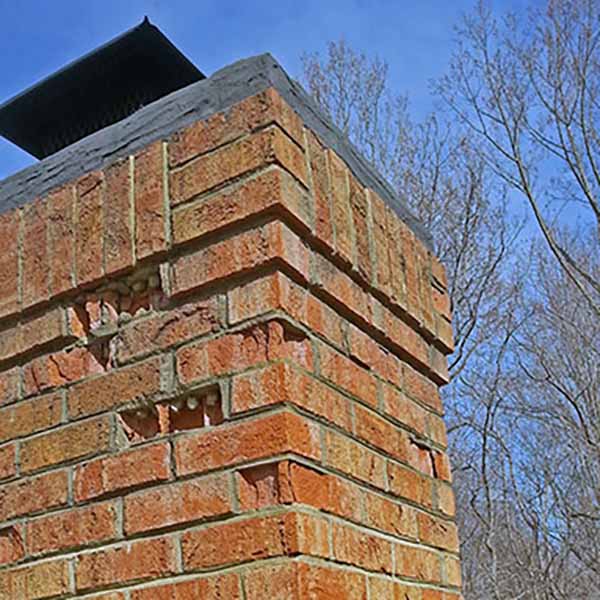
Chimney deterioration
What you’ll see: Cracked crowns, missing mortar at top courses, rusted/loose caps, attic staining—common on fully exposed chimneys in Edison Park, Norwood Park, O’Hare, and Forest Glen.
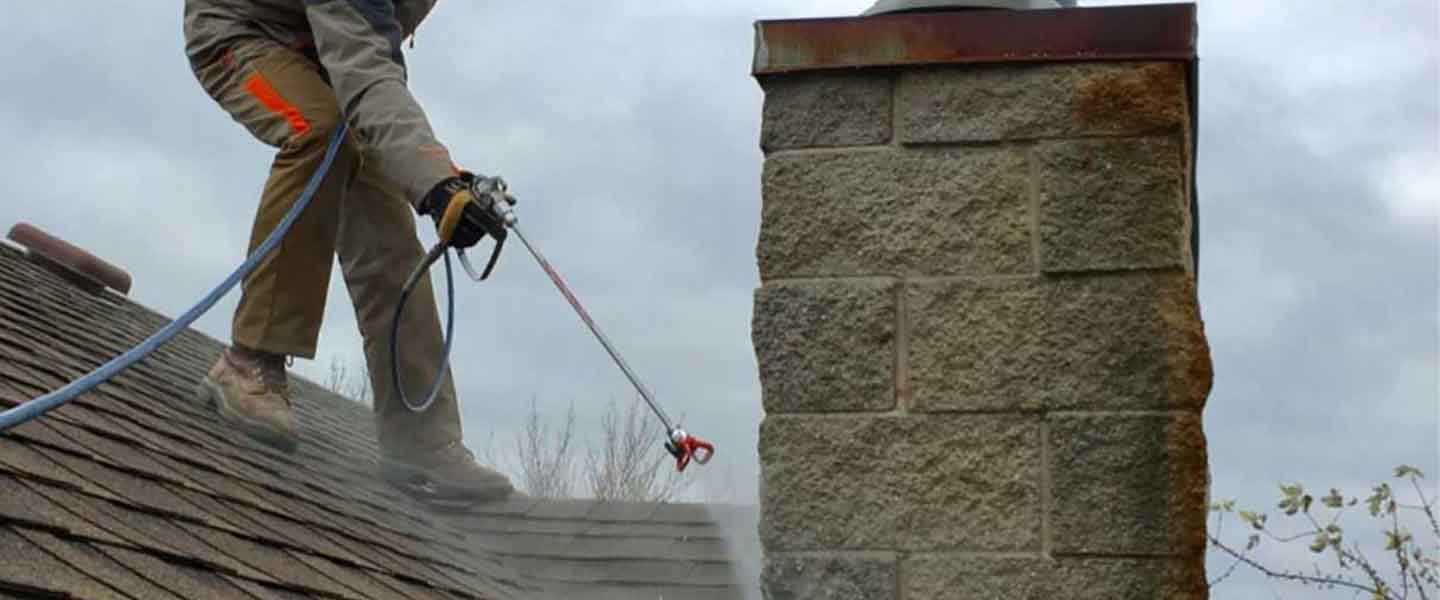
Fix: Rebuild crowns, install proper caps, repoint exposed joints, and reflash at the roofline.
Preventative Masonry Maintenance
Seasonal inspections (spring & fall)
Walk your exterior before and after winter. Look for:
- Mortar gaps wider than a credit card
- Spalled or loose bricks, especially on wind-facing walls
- Efflorescence streaks and damp interior corners
- Cracked lintels, open parapet caps, missing chimney caps
- Clogged gutters or downspouts dumping near the foundation
Waterproofing sealants & coatings
- Use silane/siloxane penetrating sealers that repel liquid water but let vapor escape—ideal for vintage Chicago brick.
- Avoid non-breathable exterior paints that trap moisture and accelerate spalling.
- Apply sealers after repairs, on clean, sound masonry, in proper weather windows.
Regular tuckpointing before cracks spread
- Repoint proactively to stop water entry early.
- Match mortar strength and tooling to the original masonry so the mortar (not the brick) is the sacrificial element.
- Bundle fixes (tuckpointing + flashing + chimney work) to solve causes, not just symptoms.
Why Professional Masonry Repair Is the Best Investment
Extends the life of vintage brick
Older Chicago bricks are often softer. Pros choose mortar and methods that protect the brick while delivering long-lasting joints—key for homes in Hyde Park, Kenwood, Bronzeville/Grand Boulevard, Oakland, and Woodlawn.
Prevents costly structural issues
Stopping water now avoids rusted lintels, rotted sills, destabilized parapets, and chimney rebuilds—far cheaper than structural recovery later for buildings across Near West Side, North Lawndale, East/West Garfield Park, and Humboldt Park.
Protects against water intrusion & mold
A trained inspection traces water from crown to cap to coping to joints to flashing and grade—closing every path so leaks don’t return in neighborhoods from Rogers Park and Edgewater to Lincoln Park and Oak Park.
Fast Reference Table
| Symptom | Likely Cause | Best Fix |
|---|---|---|
| Stair-step mortar cracks | Freeze–thaw + aged/weak mortar | Tuckpointing with compatible mortar |
| Flaking brick faces (spalling) | Trapped moisture, salt crystallization | Brick replacement + breathable sealer |
| Damp walls or basement leaks | Failed joints/flashing/weep paths | Repoint, add/repair flashing/weep, improve grading |
| Chimney crown cracks/leaks | Full exposure to weather | Rebuild crown, new cap, repoint, reflash |
Quick Homeowner Checklist
- Inspect mortar joints each spring/fall
- Check wind-facing and near-grade walls for spalling
- Verify chimney crown, cap, and flashing are intact
- Keep gutters clear; extend downspouts away from the foundation
- Use breathable waterproofing (no exterior latex on brick)
- Schedule tuckpointing repair at first signs of cracking or soft mortar
FAQs
What causes freeze–thaw brick damage in Chicago?
Moisture in masonry freezes, expands ~9%, and breaks surfaces from within. Repeated winter swings cause spalling and wider cracks.
Is waterproofing masonry worth it here?
Yes—use vapor-permeable silane/siloxane sealers on clean, sound brick to reduce water absorption without trapping moisture.
How often should I tuckpoint?
Timing varies with exposure and mortar quality. Many Chicago homes need localized tuckpointing every 10–20 years, sooner on lake- or wind-exposed walls.
Can painting exterior brick stop leaks?
Avoid non-breathable paints; they trap moisture and can accelerate damage. Fix water paths and use breathable sealers instead.
When should I call a professional mason?
If you see widespread spalling, recurring leaks after storms, chimney cracking, interior staining, or powdery/soft mortar.
👉 Don’t wait for winter damage to spread. Call Gralak Tuckpointing at (773) 282-2332 for a free masonry inspection across Chicago—Lincoln Park, Lakeview, Logan Square, West Town, Rogers Park, Portage Park—and nearby suburbs like Evanston, Oak Park, Skokie, Elmwood Park, and Northbrook.